Clarify the question
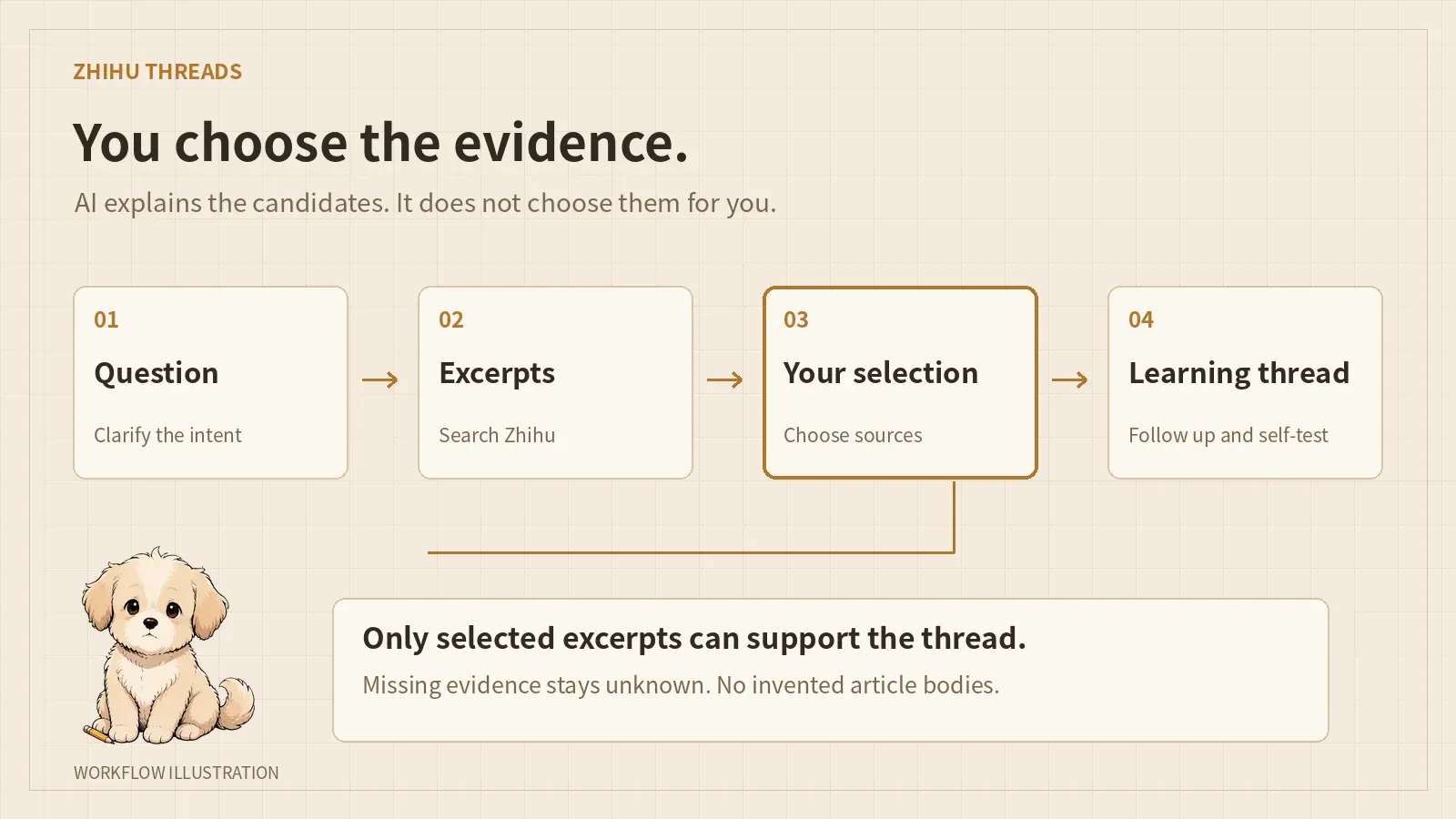
Clarify the learning intent before retrieval. When the question is vague, AI helps narrow its scope.
Project notes
Choose Zhihu source excerpts and build a learning thread with follow-up questions and self-tests.
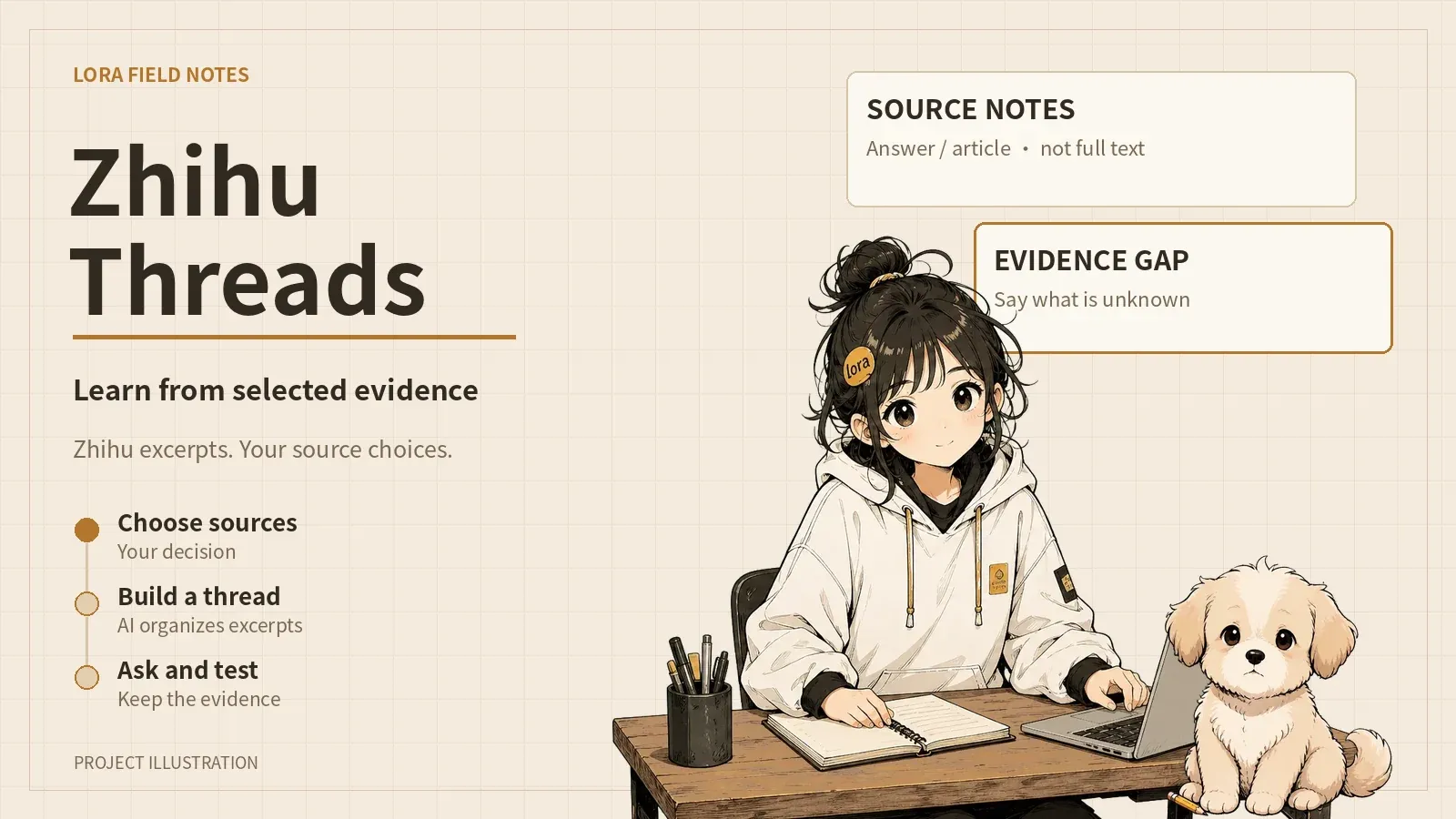
The user selects Zhihu excerpts. AI organizes the selected material into a learning thread without silently changing the evidence boundary.
Clarify the learning intent before retrieval. When the question is vague, AI helps narrow its scope.
Search returns summary-level excerpts from Zhihu answers or articles. Candidates retain their source type and link; they are not full article bodies.
AI explains relevance and possible use. The user chooses the sources. Unselected excerpts stay outside the thread’s evidence boundary.
AI organizes selected excerpts into learning nodes, open questions and self-tests. Follow-up answers remain grounded in those excerpts and retain evidence gaps.
This explains the workflow. It does not call a model or access your Zhihu account.
These notes were checked against the repository on September 9, 2026. Current source code remains authoritative. View reviewed revision 6c34a81